(Post by: Michelle Hobbs)
Hello Friends! I find myself, on this misty Thursday morning after Ash Wednesday, digging into Lent. What does Lent mean? Is it only for certain denominations? Is it necessary for all Christians? What does Ash Wednesday, and the application of ashes to the forehead, represent?
Our family has received a lot of questions about Lent recently, and I, myself, have felt a deep longing to approach Lent with more reverence this year. I had decided that I would treat this time before Easter as I do the Advent season before Christmas, as preparation for the upcoming Holy day. As I have researched more about Lent, my desire to treat it with intentionality has grown, and I wanted to share with you some of the things I have found that have been an encouragement and a confirmation to me.
Lent is the 40-day period (excluding Sundays) leading up to Easter. It starts on Ash Wednesday and ends on the Saturday before Easter. These 40 days are meant to include fasting, prayer, and acts of charity as a way to connect more deeply with God. While it is most commonly observed by the Roman Catholic and Eastern Orthodox churches, all Christians may (and, in my opinion, should) participate.
Lent starts with Ash Wednesday; the day you may see people with a cross made with ashes on their foreheads. These ashes are a reminder of our need to confess and repent of our sins, and of our human frailty. You may remember some Old Testament references to the Jews mourning over their sin by wearing sackcloth and ashes.
Daniel 9:3 – “Then I turned my face to the Lord God, seeking Him by prayer and pleas for mercy with fasting and sackcloth and ashes.”
Esther 4:3 – “There was great mourning among the Jews, with fasting and weeping and lamenting, and many of them lay in sackcloth and ashes.”
The 40-day period of Lent is symbolic of significant biblical events, including:
- Jesus’ 40 days of fasting and temptation in the wilderness (Matthew 4:1 – 11)
- Moses’ 40 days on Mount Sinai receiving the Ten Commandments (Exodus 43:28)
- Elijah’s 40-day journey to Mount Horeb (1 Kings 19:8)
- The 40 days of rain during the Great Flood (Genesis 7:12)
- The Israelites’ 40 years of wandering in the desert (Numbers 14:33)
The foremost purposes of Lent are repentance and response. Our heightened awareness of the sin that separates us from God, and our sincere mourning over that separation. Our overwhelming gratitude and praise to Jesus for what He endured on the cross to save us from that sin, our separation from Him, and the death we deserve.
I would encourage you to really concentrate on honoring this Lenten season well. It should be more than merely giving up a certain food or making a charitable donation. Those are good things if done with the right heart and with a focus on drawing closer to Christ, but we can, and should, go deeper still.
Oh Friend, what feelings wash over you when you contemplate the once for all sacrifice that Jesus made for you? The scars in His hands, His side, and His feet? When you think about the fact that God did not turn away from His creation because of our sin, but He chose to step into it to suffer and to save us, what praise does that evoke?
During these days leading up to Easter, remember specific instances when Jesus has entered into your own particular despair. Your lost state. Your illness. Your grief. Your abandonment. Your mistakes. Your trespasses against others. Your feeling of worthlessness. Recall the victories He has given you. Your goals. The desires of your heart. Your success. Think about all the things He saved you from, that you will never know about this side of Heaven, with what you thought was unanswered prayer.
“The miracle of both the incarnation and the Cross is that God invades and redeems what we consider to be dead. Our hearts. Our hope. He does not cut His losses and turn to something new, rather, He enters into His broken and dying creation to summon it back to life… He arrives at the very heart of the circumstances that cause us to believe there is no other end than death and makes them the revelation, not of divine abandonment, but our belovedness.” (Sarah Clarkson – From the Vicarage)
Concentrate on such things this Lent. Be obedient to what the Lord reveals to you as you do.
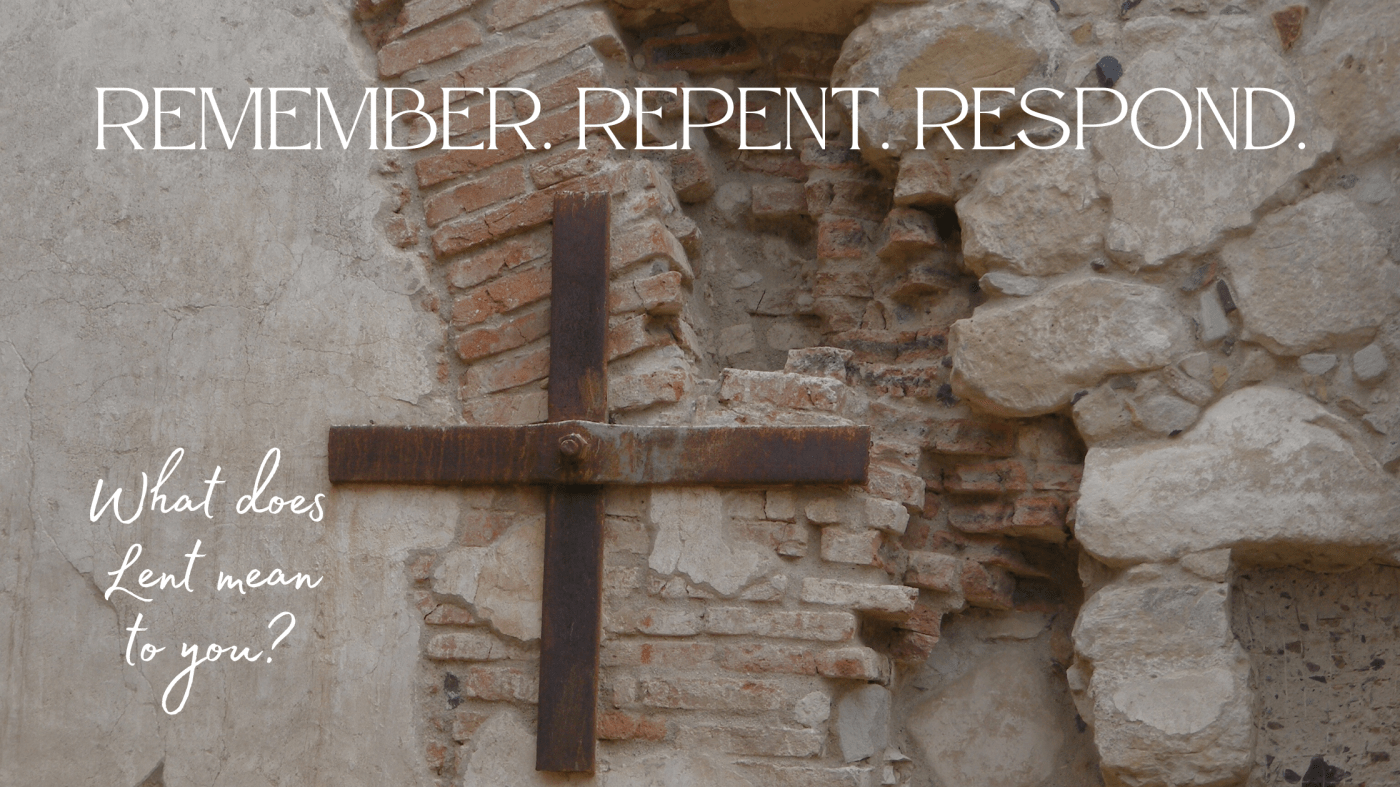
Remember. Repent. Respond. Give Praise!



 The Few
I really enjoyed this post, it has definitely been on my mind lately! Very informative!
LikeLiked by 1 person